Over the past two decades, tools, technologies, and the way we interact with products have changed dramatically. So has design itself. My journey has taken me from graphic design and branding through visual communication to UX/UI, behaviour design, and experience design.
Looking back, however, I believe the biggest change was not the emergence of new technologies. It was the change in the answer to one fundamental question: why do we design in the first place?
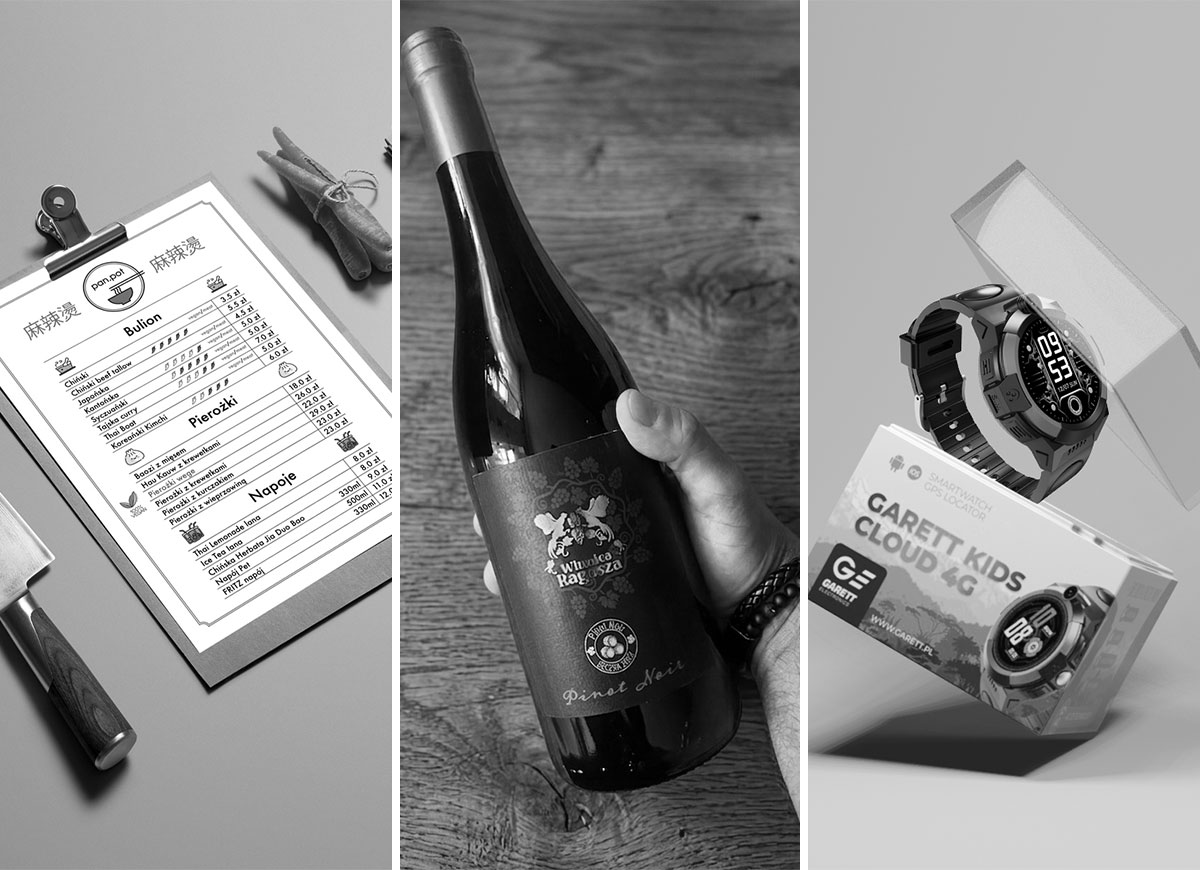
When I started working in design, design was primarily something you could see. A logo. A poster. An advertisement. Packaging. A website. A layout. A designer created a tangible artefact, and its quality was judged largely by its aesthetics, concept, and execution. The computer was a tool that made it possible to turn ideas into visual outcomes faster and more precisely.
Today, things look very different.
We design digital products, systems, interactions, and entire experiences. We analyse user behaviour, test solutions, work with data, build design systems, and increasingly use artificial intelligence as part of the creative process. And yet, the fundamental question remains the same:
Does what we designed actually work?
From creating things to solving problems
One of the biggest changes in my own approach to design has been moving away from thinking about a project as a final visual outcome. In the beginning, it was natural to focus on how something looked. Composition, colour, typography, imagery, proportions. Those things still matter. I didn’t stop being a visual designer simply because I moved into UX. What changed was my perspective. Over time, I became increasingly interested in what happens before and after the design itself.
What brought the user here?
Why did they choose this option?
Why did they abandon the process?
What makes them trust a brand?
What makes them come back?
Design gradually became less about creating individual elements and more about solving problems. That is one of the most important things 20 years in the industry have taught me: a good design is not the goal. It is a tool for achieving a specific goal.
Design that has to work
Aesthetics matter. I still believe that good design should be attractive, consistent, and carefully crafted. But attractiveness alone is not enough. We can create a beautiful e-commerce website where users cannot find what they are looking for. We can design an impressive app where the core functionality is hidden. We can create a visually powerful campaign that gets attention but fails to communicate the right message.
In each of these cases, we may have a good visual design but poor design overall. That is why context has become increasingly important to me.
Who is using the product?
In what situation?
What are they trying to achieve?
What limitations do they have?
What do they expect?
And what should happen next?
This is where Visual Design begins to meet UX.
From branding to experience
Branding has been an important part of my design journey, and it continues to influence the way I think about digital products.
A brand has never been just a logo to me. It is a system of meanings, emotions, messages, and experiences.
A person might first encounter a brand through an advertisement, then visit its website, download an app, make a purchase, receive an email, and eventually contact customer support. Every one of those touchpoints contributes to their experience of the brand.
That makes it increasingly difficult to draw a clear line between branding and UX. Visual identity influences how we perceive a product. UX influences how we use it. Copywriting influences how we interpret messages. Interactions influence how we feel. All of these elements form one experience.
A brand doesn’t end with its visual identity. A brand begins where someone’s experience with it begins.
Why did I become interested in behaviour design?
UX taught me to look at products from the user’s perspective. Behaviour design took that thinking one step further. I became interested in a deceptively simple question:
Why do people do what they do?
That question changes the way you design.
If a user doesn’t click a button, the problem isn’t necessarily its colour.
If they abandon a form, the problem might not be the layout.
If they don’t return to an app, another animation isn’t necessarily the answer.
User behaviour is shaped by many factors: their goal, context, previous experiences, emotions, level of knowledge, limitations, and the way information is presented. Designing for behaviour therefore requires a broader perspective. It is not enough to design an interface. You have to understand the person using it.
Design starts before Figma
One of the common misconceptions about a designer’s work is that the design process begins inside the design tool. We open Figma, create the first frame, and start designing. For me, it should be the other way around. I open Figma once I have enough information to understand what problem I am actually trying to solve.
Depending on the project, that can mean analysing data, conducting qualitative or quantitative research, auditing an existing solution, analysing competitors, talking to users, mapping journeys, or testing concepts. Not every project needs an extensive research process. There is little value in spending weeks on research simply because that is what a textbook process says we should do. The process should be proportional to the problem.
Sometimes we need a large amount of data.
Sometimes a few conversations and a good analysis are enough.
Sometimes the problem is so obvious that the greatest value a designer can bring is simply turning the insight into a solution quickly.
What matters is not how many stages the process has, but whether those stages help us make better decisions.
The designer and the business
A modern designer cannot operate in isolation from business. A product has users, but it also has an owner, objectives, constraints, and commercial realities. A company may want to increase conversion. A product may need stronger engagement. A brand may want to build trust. A team may want to reduce the number of support requests. Each of these goals can lead to a different design solution. That is why I increasingly focus on the space where three perspectives meet:
user needs, business goals, and technological possibilities.
That is where good design happens. A designer who understands this context stops being simply an executor. They become a partner in decision-making.
Is experience more valuable today than it used to be?
Paradoxically — yes and no.
On one hand, younger designers have access to tools and knowledge that were unimaginable when I started. Tutorials, courses, communities, component libraries, ready-made systems, AI. The barrier to entering the industry is much lower. On the other hand, that is precisely why it is becoming harder to stand out through tool proficiency alone. Figma is not a competitive advantage. Photoshop is not a competitive advantage. Even knowing how to use AI will eventually stop being an advantage once everyone has access to the same tools.
What becomes valuable is the way you think. The ability to ask the right questions. Understanding people. Connecting different disciplines. Making decisions with incomplete information. After 20 years in the industry, I consider these some of the most valuable skills a designer can have.
AI won’t replace design. It will redefine it.
Artificial intelligence is another major turning point. After working in the industry for two decades, I have seen many technological shifts. None, however, has had quite the same potential to change how we create, think, and communicate design. AI can accelerate research. It can help analyse information. It can generate dozens of visual directions. It can produce variations of messaging. It can help create moodboards, concepts, and prototypes. That is a huge shift. But there is one thing AI doesn’t automatically solve for a designer.
It doesn’t answer the question of what we should create in the first place.
It can generate an image. That doesn’t mean it is the right image.
It can generate an interface. That doesn’t mean it solves the user’s problem.
It can generate copy. That doesn’t mean it understands the brand strategy.
That is why I see AI primarily as an extension of a designer’s capabilities.
Not a replacement for thinking.
From designing tools to designing decisions
believe this is where one of the biggest changes in the design profession will happen. For many years, part of a designer’s value was connected to their ability to create. Today, an increasing part of that process can be automated. That means value is shifting from production towards decisions.
What should we choose?
What should we reject?
Which direction makes sense?
Which one serves the user?
Which one supports the brand?
Which one achieves the business goal?
The more variations we can generate, the more important our ability to evaluate them becomes. Perhaps the future of design won’t belong to the designer who can create the most. Perhaps it will belong to the designer who knows best what is worth creating.
What have 20 years taught me?
Every stage of my career has left me with something I still use today. Graphic Design taught me to look. Branding taught me to create meaning. Marketing taught me to understand communication. UX taught me to see things from the user’s perspective. Research taught me not to trust my own assumptions. Behaviour design taught me to analyse actions and motivations. Technology taught me to stay flexible. And the recent rise of AI has reminded me that a designer cannot become too attached to a single way of working. Tools change. Processes change. Roles change. But people remain at the centre.
I no longer design only what people see
After 20 years, I still genuinely enjoy the craft of creating. Typography. Colour. Composition. Interaction. Motion. Detail.
All of it still matters. But today, I see design more broadly. I don’t want to design only what users see on a screen. I want to understand what happens just before and just after. What the user will think. What they will feel. What decision they will make. Whether they will come back. Whether they will trust the brand. Whether the product will actually solve their problem. That, for me, is the next stage of design — moving from pixels to behaviour.
What comes next?
I don’t know. And I actually think that’s a good thing.
Design has always been a discipline of change. In a few years, some of the tools we use today may feel outdated. Some of the tasks designers currently perform will probably become automated. New specialisations will emerge, and the boundaries between UX, technology, strategy, branding, and AI will become increasingly blurred. I don’t believe the need for design will disappear. As long as there are people with problems, needs, limitations, and goals, there will be a need for someone who can understand them and turn that understanding into a solution.
That is why, after 20 years, I don’t see my career as a finished chapter. Quite the opposite. I feel that all the experiences along the way — from graphic design, branding, and marketing to UX, behaviour design, and technology — are finally starting to form one bigger picture.
Today, I no longer ask: “How should we design this?”
I start with: “Why should we design this at all?”
And only then: “How can we make it work?”
Perhaps that change in the question is the most valuable thing 20 years in design have given me.